

1. What Is a Beanie Hat?
A Beanie Hat is a close-fitting knitted headwear accessory designed to provide warmth, comfort, and everyday style. Traditionally made from wool, acrylic, cotton, polyester, or blended yarns, a Beanie Hat is widely used in autumn and winter collections, outdoor activities, streetwear, and casual fashion.
Unlike structured caps, a Beanie Hat generally features a flexible construction that adapts to different head shapes. Its knitted structure allows manufacturers to create different levels of thickness, elasticity, insulation, and surface texture.
A modern Beanie Hat is available in several constructions, including rib-knit, plain-knit, cable-knit, double-layer, and fleece-lined designs. Each construction offers different functional advantages.
|
Beanie Hat construction |
Main characteristics |
Typical application |
|---|---|---|
|
Rib-knit |
Elastic, textured, comfortable fit |
Everyday winter wear |
|
Plain-knit |
Smooth and lightweight |
Casual fashion |
|
Cable-knit |
Decorative raised patterns |
Premium winter collections |
|
Double-layer knit |
Additional insulation |
Cold-weather activities |
|
Fleece-lined |
Soft interior with added warmth |
Outdoor winter wear |
The choice of construction should depend on the target market, climate, intended use, and product positioning. For brands developing a winter collection, selecting the right Beanie Hat structure is an important part of product development.

2. What Materials Are Best for a Soft Winter Hat?
Material selection directly influences softness, warmth, durability, elasticity, and maintenance.
A high-quality Soft winter Hat should provide comfortable skin contact without excessive irritation or unnecessary weight. Manufacturers commonly select acrylic, wool, cotton, polyester, and blended yarns according to product requirements.
Acrylic yarn is popular because it is lightweight, relatively affordable, colorfast when properly processed, and easy to maintain. It is frequently used in commercial knitted accessories.
Wool offers natural thermal insulation and moisture-management properties. Merino wool is particularly valued for its fine fiber structure and soft hand feel. Cotton provides breathability but generally offers less insulation than wool when exposed to cold, wet conditions.
|
Material |
Main advantages |
Potential limitations |
|---|---|---|
|
Acrylic |
Lightweight, affordable, easy-care |
Synthetic fiber; may generate microfibers |
|
Merino wool |
Soft, insulating, moisture management |
Higher cost and care requirements |
|
Cotton |
Breathable and comfortable |
Lower insulation when wet |
|
Polyester |
Durable and quick-drying |
Petroleum-based unless recycled |
|
Blended yarn |
Balanced performance and cost |
Composition must be accurately disclosed |
For a Soft winter Hat, manufacturers should evaluate yarn fineness, knitting density, finishing treatments, and skin-contact comfort rather than relying on fiber composition alone.

3. How Is a Sustainable Knitted Beanie Hat Produced?
A sustainable Knitted Beanie Hat should be evaluated throughout its production lifecycle, including raw material sourcing, yarn manufacturing, knitting, dyeing, finishing, packaging, and transportation.
Recycled polyester and recycled acrylic can help reduce dependence on virgin raw materials. However, recycled content alone does not automatically make a product environmentally sustainable.
According to Textile Exchange, the Global Recycled Standard (GRS) supports the verification of recycled materials and relevant processing requirements. Its certification framework helps businesses substantiate material-related claims.
Textile Exchange+1
When developing a sustainable Knitted Beanie Hat, buyers should consider:
Verified recycled fiber content.
Responsible chemical and water management.
Production waste reduction.
Traceability throughout the supply chain.
Durable construction that extends product life.
Appropriate packaging and transportation practices.
The United Nations Environment Programme also identifies synthetic textile microfibers as an environmental concern because washing synthetic garments can release small plastic fibers into wastewater and aquatic environments.
UNEP - UN Environment Programme
Therefore, a sustainable Knitted Beanie Hat should combine responsible sourcing, reliable manufacturing, product longevity, and transparent environmental claims.
4. Why Choose a Knitted Hat with Cuff?
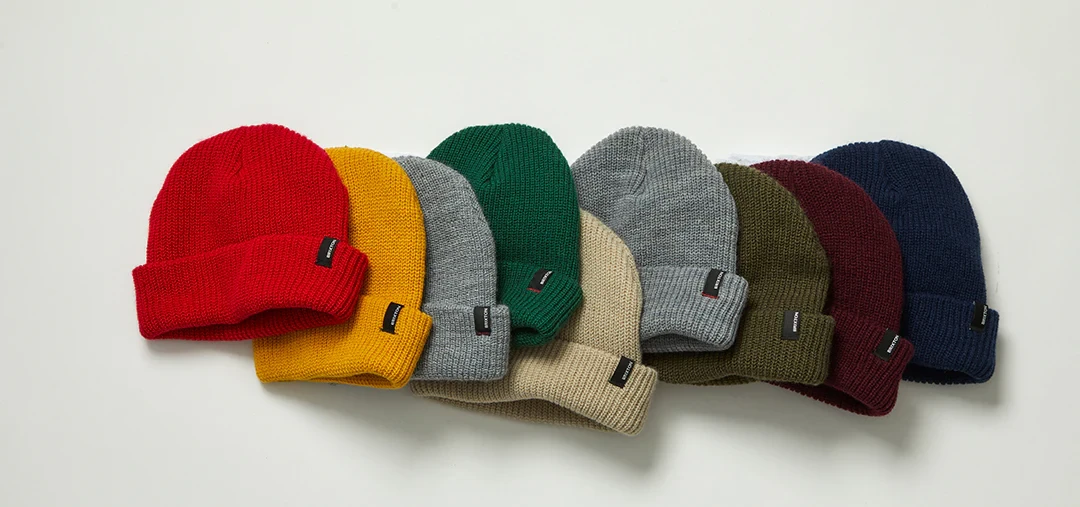
A Knitted Hat with Cuff features a folded lower edge that creates an additional layer of knitted material around the forehead and ears.
This construction provides several practical benefits:
Additional coverage: The folded section can increase warmth around the ears and forehead.
Adjustable appearance: Wearers can adjust the cuff height to change the overall silhouette.
Improved branding: The cuff provides a convenient area for embroidered logos, woven labels, and custom patches.
Structural definition: The folded edge creates a clean, recognizable winter-hat profile.
For fashion brands, a Knitted Hat with Cuff is particularly suitable for customized corporate merchandise, promotional products, outdoor apparel, and retail winter collections.
Manufacturers should pay attention to cuff dimensions, elasticity recovery, seam alignment, and embroidery placement to maintain consistent product quality.
5. Is an Acrylic POM Beanie Suitable for Winter Fashion?
An Acrylic POM beanie combines an acrylic knitted body with a decorative pom-pom positioned at the crown.
Its popularity comes from its combination of affordability, color versatility, lightweight construction, and distinctive appearance.
An Acrylic POM beanie can be developed in different configurations:
Single-color knitted body with matching pom-pom.
Contrasting pom-pom and body colors.
Ribbed cuff with embroidered branding.
Double-layer construction for additional warmth.
Custom jacquard patterns and seasonal graphics.
When sourcing an Acrylic POM beanie, buyers should inspect pom-pom attachment strength, yarn consistency, color matching, and overall shape retention.
A secure attachment is especially important because decorative components can become loose through repeated handling or wear.
6. What Is the Difference Between a Beanie Hat and a Fashion Skull Cap?
A Fashion Skull Cap is generally designed with a closer, more streamlined fit than a traditional winter beanie.
While both products cover the head, their intended applications and visual characteristics may differ.
|
Feature |
Traditional Beanie Hat |
Fashion Skull Cap |
|---|---|---|
|
Fit |
Regular to relaxed |
Close-fitting |
|
Crown |
May have additional volume |
Usually streamlined |
|
Cuff |
Optional or folded |
Often minimal |
|
Styling |
Casual and winter fashion |
Streetwear and minimalist fashion |
|
Typical use |
Cold-weather protection |
Fashion and everyday wear |
A Fashion Skull Cap can be manufactured using lightweight knitted fabrics, stretch yarns, or thin double-layer constructions.
For brands targeting younger consumers, combining minimalist styling with distinctive knitting textures can create a versatile headwear collection.
7. How Can Buyers Evaluate Beanie Hat Quality?
Product quality should be evaluated through material inspection, knitting consistency, dimensional stability, appearance, and durability testing.
A professional Beanie Hat manufacturer should establish quality-control procedures before mass production.
Important inspection points include:
Yarn quality: Check yarn thickness, color consistency, and visible defects.
Knitting consistency: Inspect stitch density, surface uniformity, and loose loops.
Dimensional stability: Measure the product before and after washing.
Pilling resistance: Evaluate whether surface fibers form small balls during wear.
Colorfastness: Check resistance to color fading and transfer.
Accessory security: Inspect pom-poms, labels, buttons, and decorative components.
ISO 12945-4:2020 provides a visual assessment method for textile pilling, fuzzing, and matting. It applies to knitted and woven fabrics and can be referenced when establishing quality inspection procedures.
ISO
Recommended quality inspection checklist
|
Inspection item |
Quality requirement |
Recommended method |
|---|---|---|
|
Stitch consistency |
No obvious missing or uneven stitches |
Visual inspection |
|
Size accuracy |
Within approved sample tolerance |
Measurement |
|
Pilling |
Meets agreed customer standard |
ISO 12945 testing |
|
Colorfastness |
Meets specified performance level |
Laboratory testing |
|
Logo quality |
Correct position and clear details |
Visual inspection |
|
Pom-pom attachment |
Securely attached |
Pull and handling test |
Quality requirements should be agreed upon before production, with testing conditions and acceptance criteria documented in the technical specification.

8. How Should You Care for a Knitted Beanie Hat?
Proper care helps maintain the appearance, elasticity, and service life of knitted accessories.
Different fibers require different cleaning methods. Consumers should always follow the care instructions provided by the manufacturer.
General recommendations include:
Use a gentle washing cycle or hand-washing method when permitted by the care label.
Avoid excessive heat, particularly for acrylic and synthetic blends.
Use mild detergent and avoid unnecessary bleaching.
Reshape the product while damp.
Air-dry flat when the care instructions allow.
Store in a clean, dry environment.
For wool-containing products, follow the specific washing and drying instructions to minimize shrinkage and deformation.
9. Common Beanie Hat Manufacturing Problems and Solutions
Professional production requires identifying potential defects before bulk manufacturing.
|
Common problem |
Possible cause |
Recommended solution |
|---|---|---|
|
Hat loses elasticity |
Poor yarn recovery or unsuitable knitting tension |
Adjust yarn selection and knitting parameters |
|
Excessive pilling |
Fiber characteristics or surface friction |
Improve yarn selection and conduct pilling tests |
|
Uneven crown shape |
Incorrect knitting tension or finishing |
Standardize machine settings and shaping |
|
Logo distortion |
Incorrect embroidery density |
Optimize embroidery parameters |
|
Pom-pom detachment |
Insufficient attachment strength |
Improve stitching and attachment inspection |
|
Color differences |
Dyeing or yarn-batch variation |
Establish approved color standards |
|
Excessive shrinkage |
Unsuitable washing or finishing process |
Conduct dimensional stability testing |
A reliable manufacturer should maintain pre-production samples, approved color references, production records, and final inspection reports.
These procedures help reduce production risks and improve consistency between repeat orders.
10. What Should You Consider When Choosing a Beanie Hat Supplier?
Selecting a qualified supplier is essential for brands, wholesalers, importers, and promotional merchandise companies.
Before placing a bulk order, buyers should evaluate the supplier's:
Experience in knitted headwear manufacturing.
Yarn and material sourcing capabilities.
Customization and embroidery services.
Sample development process.
Quality inspection procedures.
Production capacity and delivery management.
Material certification and documentation capabilities.
For international buyers, transparent product specifications are particularly important.
The US Federal Trade Commission explains that applicable textile and wool labeling requirements address fiber content, manufacturer or marketer identity, and country of origin. Wool-containing products have specific labeling considerations, including certain hats. Buyers should therefore verify the relevant requirements for their destination markets.
Federal Trade Commission+2
A trustworthy Beanie Hat supplier should provide accurate material declarations and avoid unsupported claims about recycled content, environmental performance, or product certifications.
11. Frequently Asked Questions About Beanie Hats
Q1: What is the warmest material for a Beanie Hat?
Wool, particularly suitable Merino wool constructions, offers excellent insulation. However, warmth also depends on yarn thickness, knitting density, layering, and fit.
Q2: Is acrylic suitable for winter beanies?
Yes. Acrylic is widely used in winter accessories because it is lightweight, affordable, and available in various colors and textures. Its insulation performance depends on the yarn and knitted construction.
Q3: What makes a sustainable Knitted Beanie Hat environmentally responsible?
Responsible sourcing, verified recycled content, controlled manufacturing processes, reduced waste, and product durability are important considerations. Environmental claims should be supported by appropriate documentation.
Q4: Why is a Knitted Hat with Cuff popular?
Its folded edge provides additional coverage and creates a practical surface for embroidered logos and customized branding.
Q5: Can an Acrylic POM beanie be customized?
Yes. Manufacturers can customize yarn colors, pom-pom designs, cuff dimensions, embroidery, woven labels, and jacquard patterns.
Q6: What is the difference between a Fashion Skull Cap and a traditional beanie?
A Fashion Skull Cap generally has a closer, more streamlined silhouette, while a traditional beanie may offer a relaxed fit and additional crown volume.
Q7: How can buyers prevent knitted hats from losing their shape?
Select suitable yarns, control knitting tension, conduct dimensional stability testing, and follow appropriate washing and drying instructions.
12. Conclusion: Choosing the Right Beanie Hat for Quality and Style
A well-designed Beanie Hat combines material performance, knitting technology, functional comfort, and contemporary styling.
Whether developing a Soft winter Hat, a sustainable Knitted Beanie Hat, a Knitted Hat with Cuff, an Acrylic POM beanie, or a Fashion Skull Cap, brands should prioritize verified material information, consistent manufacturing, and reliable quality inspection.
For wholesalers and fashion brands, working with an experienced knitted headwear manufacturer can simplify customization, improve product consistency, and support long-term collection development.
Ultimately, a successful Beanie Hat is not simply a winter accessory. It is a combination of practical performance, product design, manufacturing expertise, and responsible sourcing.


