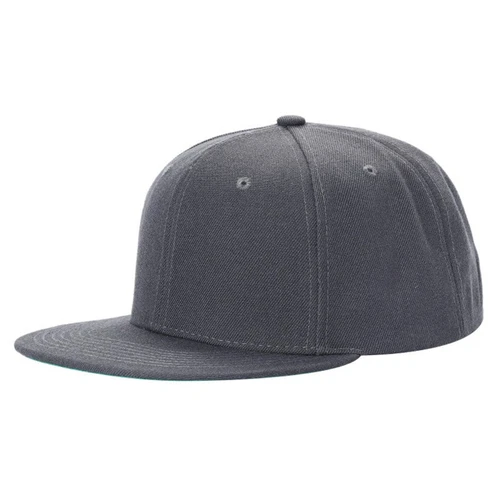
The choice of material plays a crucial role in the versatility of trucker hats across various environments and styles. They must not only fulfill basic functions like sun protection, breathability, and durability, but also consider feel, visual appeal, and ease of care. Understanding the characteristics and suitable scenarios for common materials helps us make clearer choices when wearing or storing them.
Cotton is one of the most classic choices for trucker hats, especially cotton canvas. This material is soft, thick, breathable, and skin-friendly, making it suitable for extended wear without causing stuffiness or discomfort. Cotton canvas has a rustic texture, stable dyeing properties, and produces rich, even colors, making it commonly used in basic and retro-style hats. However, cotton is highly absorbent and doesn't dry quickly after rain or heavy sweating. It may also shrink slightly or wrinkle after multiple washes, requiring regular ironing for maintenance.
Polyester-cotton blends are widely used in trucker helmets, combining the abrasion resistance and wrinkle resistance of polyester with the comfort and breathability of cotton. Different blend ratios result in different performance characteristics; a high cotton content retains a soft touch, while a high polyester content improves stain resistance and quick-drying ability, making it suitable for frequent outdoor use or working in dusty environments. This type of fabric generally maintains the helmet's shape better, dries quickly after washing, and is relatively easy to care for daily. However, its breathability is slightly inferior to pure cotton in extremely humid and hot conditions.
Sporty trucker helmets often use a combination of quick-drying fabric and a mesh lining. Quick-drying fabrics are mostly made of polyester fibers through special weaving or coating treatments, which can quickly wick away moisture from the skin and keep the inside of the helmet dry. The mesh lining is distributed on the inside or back of the helmet to increase airflow and reduce stuffiness. This type of material is ideal for summer, cycling, hiking, or any high-activity scenario; it is lightweight and almost non-absorbent, but it has a stiffer feel and is not as malleable as cotton.
High-end or themed trucker hats sometimes incorporate leather, faux suede, or waterproof coated fabric. Genuine leather trim enhances the hat's texture and quality, highlighting a sophisticated and retro feel, but requires more care and must be protected from moisture and scratches. Waterproof coated fabric forms a dense protective film on the surface, repelling light rain and splashes, suitable for commuting or traveling in changeable weather, but breathability is reduced due to the coating, requiring attention to ventilation in hot environments.
When choosing materials, first determine the primary usage scenario: if comfort and versatility are key, cotton or cotton-polyester blends are good bases; if performance in sports and high-temperature environments is emphasized, quick-drying and mesh combinations are more suitable; for a premium feel and protection, consider leather or waterproof fabrics. Secondly, consider maintenance habits; cotton requires careful care, while synthetic fibers and coated materials are more durable. Furthermore, different materials affect the presentation of prints and embroidery; intricate patterns appear clearer and more durable on smooth, dense fabrics.
The material of a trucker hat not only determines its functional boundaries but also influences the wearing experience and style expression. Knowing how to balance comfort, durability, and aesthetics according to needs is the key to making this seemingly simple hat both comforting and eye-catching in daily life.